Our trip to Bhutan: Day 4, Phobjikha valley
Table of Contents
Before I deep-dive into your trip, let me say a few words about the trip arrangement. Firstly, how did we choose Bhutan? I’ve been to Nepal before and heard about Bhutan being an Asian Switzerland, so visiting this country was on my list a long time ago.
Secondly, we did not plan much, the travel agency did everything for us. We expressed our interest and the itinerary was adjusted based on our tastes. In addition, the itinerary was customized even more during the trip according to our desires. The guide was very attentive and helpful.
Lastly, our package included everything—three meals a day, a hotel, flight tickets, etc. We brought some money but barely spent any. Our main expenses were a few alcoholic drinks, which aren’t included, souvenirs, and generous tips for our amazing guide and driver.
I want to say a big thank you to Breathe Bhutan and personally to Sonam and Kuenga for our fantastic time in Bhutan!
Links to the next parts
- Bhutan, Day 1: Arrival
- Bhutan, Day 2: Thimphu City and Fertility temple
- Bhutan, Day 3: Punakha
- Bhutan, Day 5: Festival in the Phunaka fortress
- Bhutan, Day 6: Tiger Nest hike
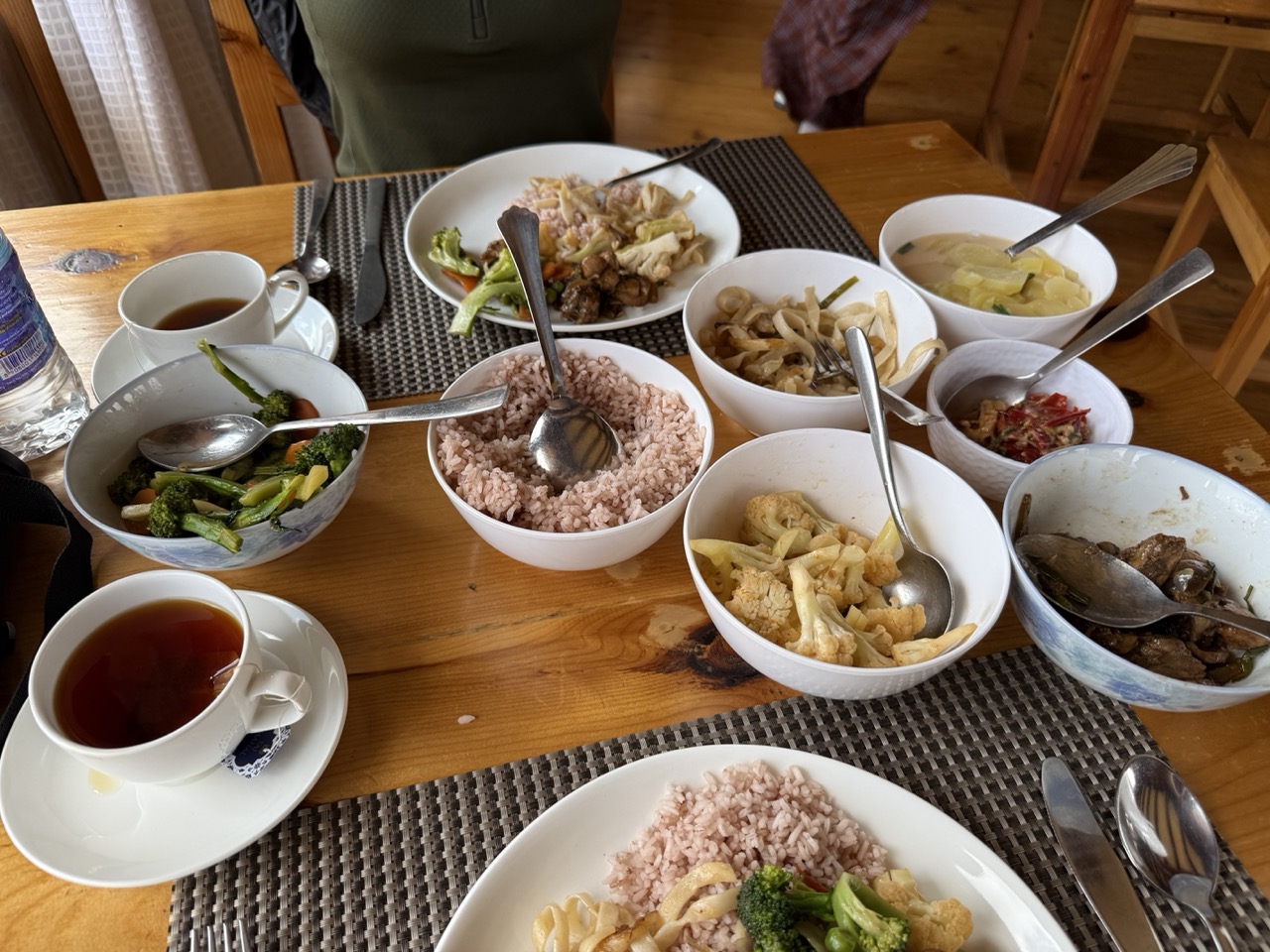
It was the last day at this fantastic homestay with amazing food and extremely attentive and lovely personnel.
A drive to the Phobjikha Valley
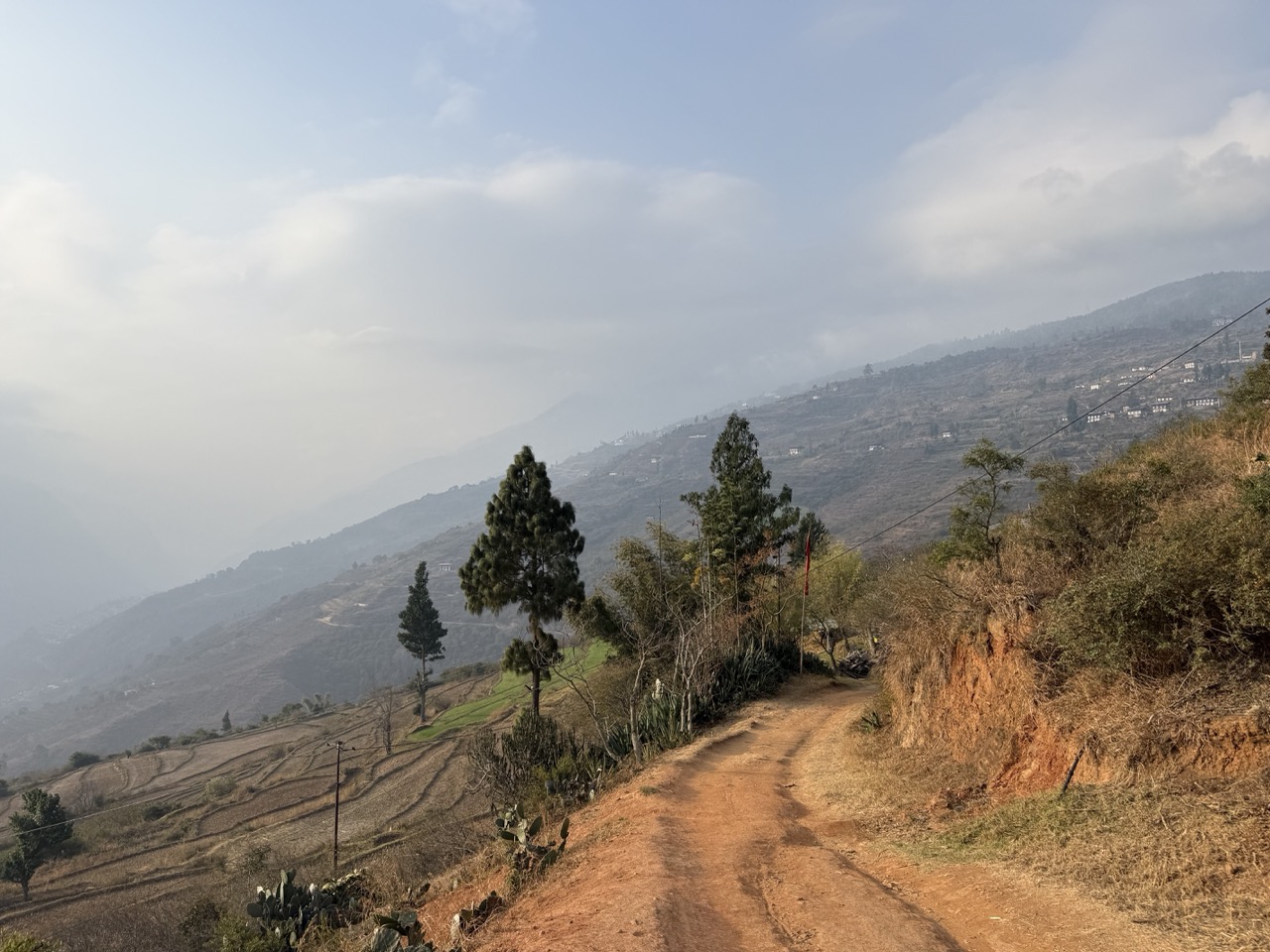
This morning we were told about a relatively long drive to Phobjikha valley, which is located in the northern part of Bhutan. The guide told us to be well-dressed for this trip, but I decided to ignore his advice. That was a grave mistake. Up in the mountain was far colder than in the Punakha, so I was shivering the whole day.
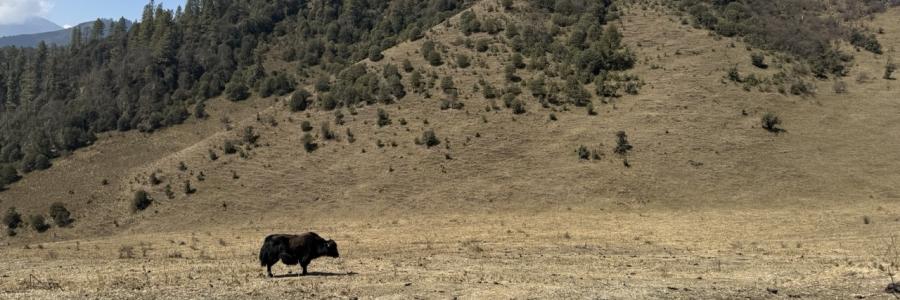
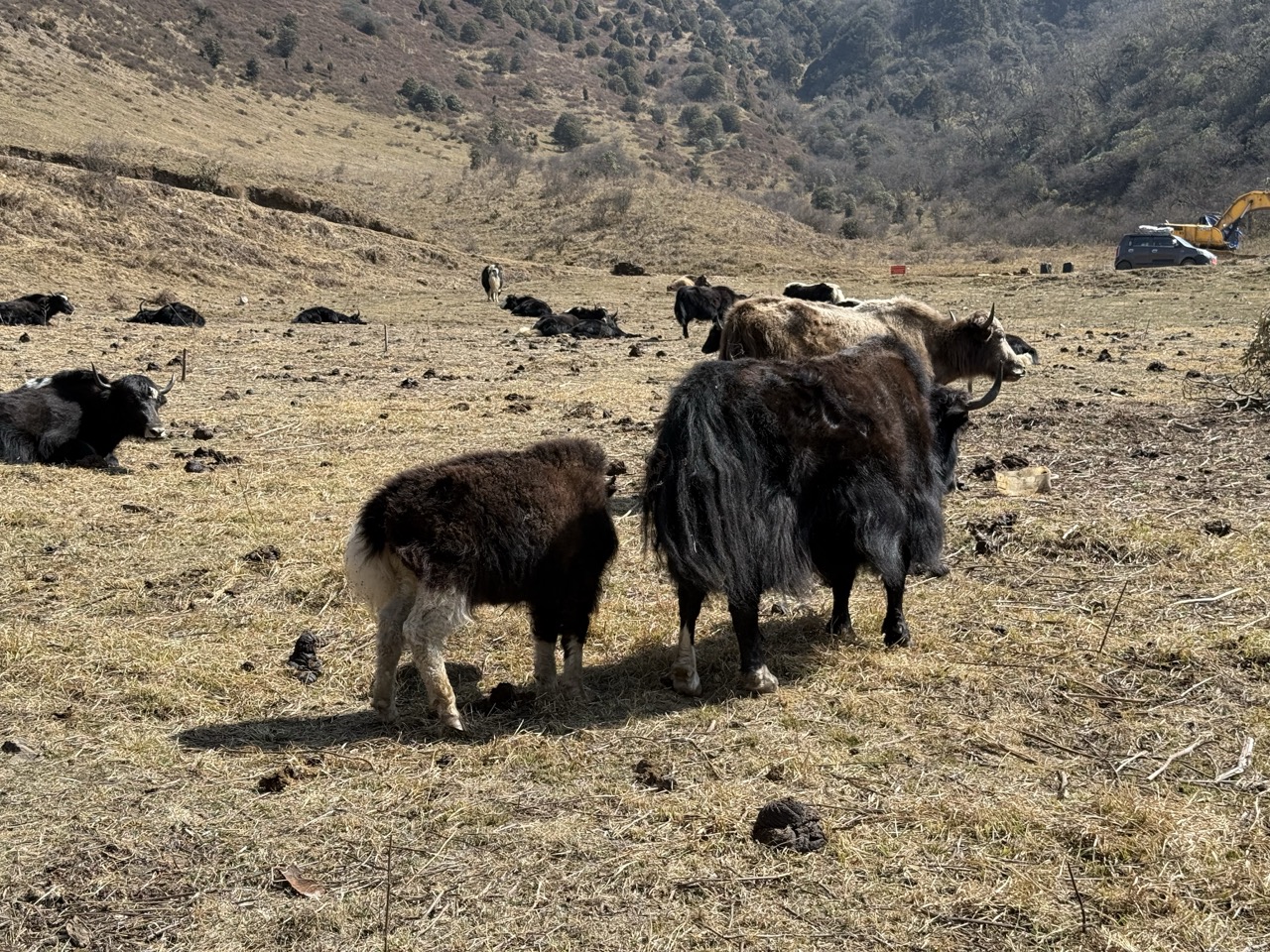
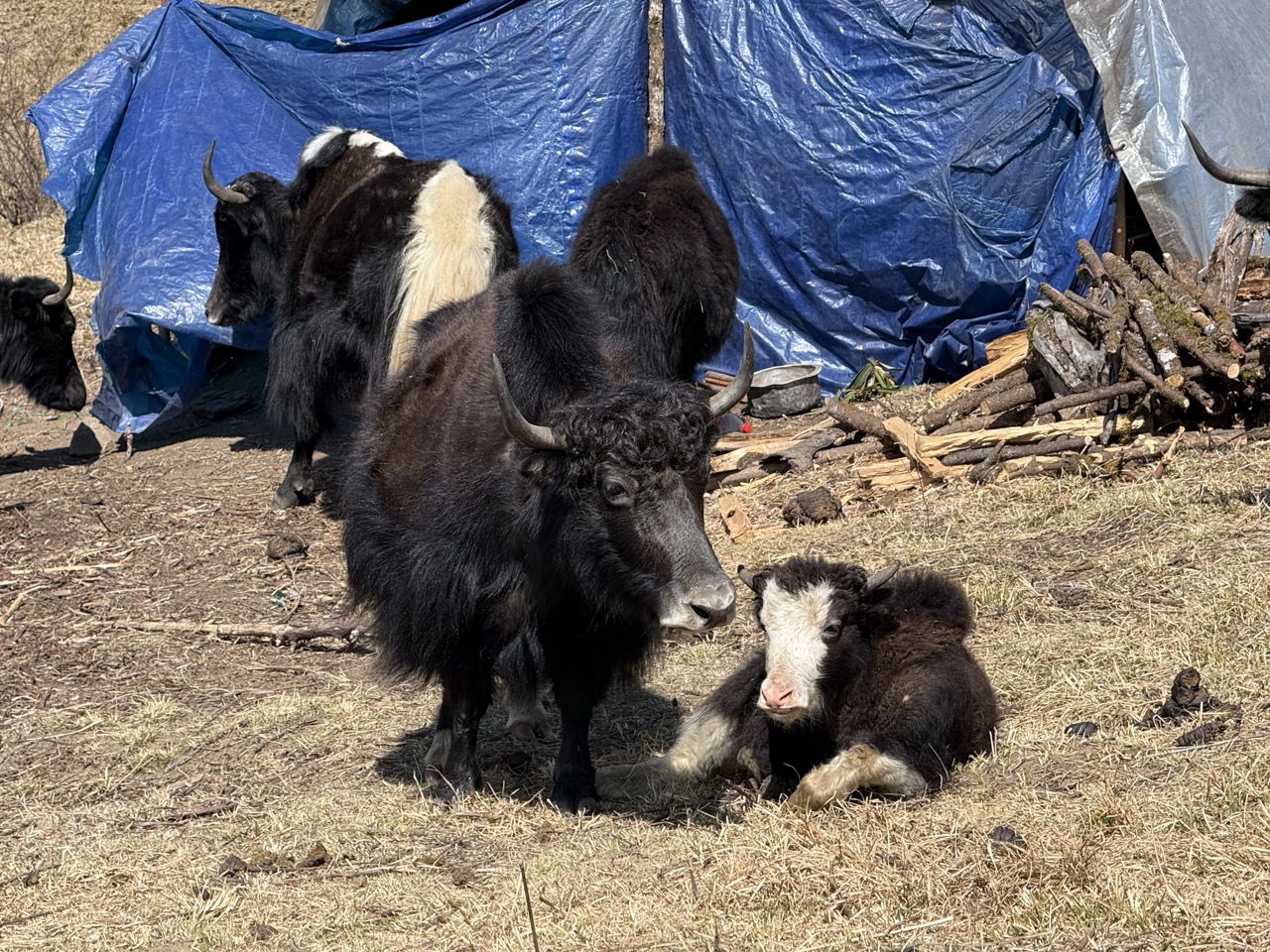
The road to the valley was the same as other roads in Bhutan - breathtaking views on each turn. Just 10 minutes before our arrival, we realized that cows, who usually graze on the road shoulders, somehow changed. They became furrier, bulkier, and with long horns. Thus, we quickly realized that’s Yak herders. Our guide and driver spot our excitement and immediately stop near the herd.
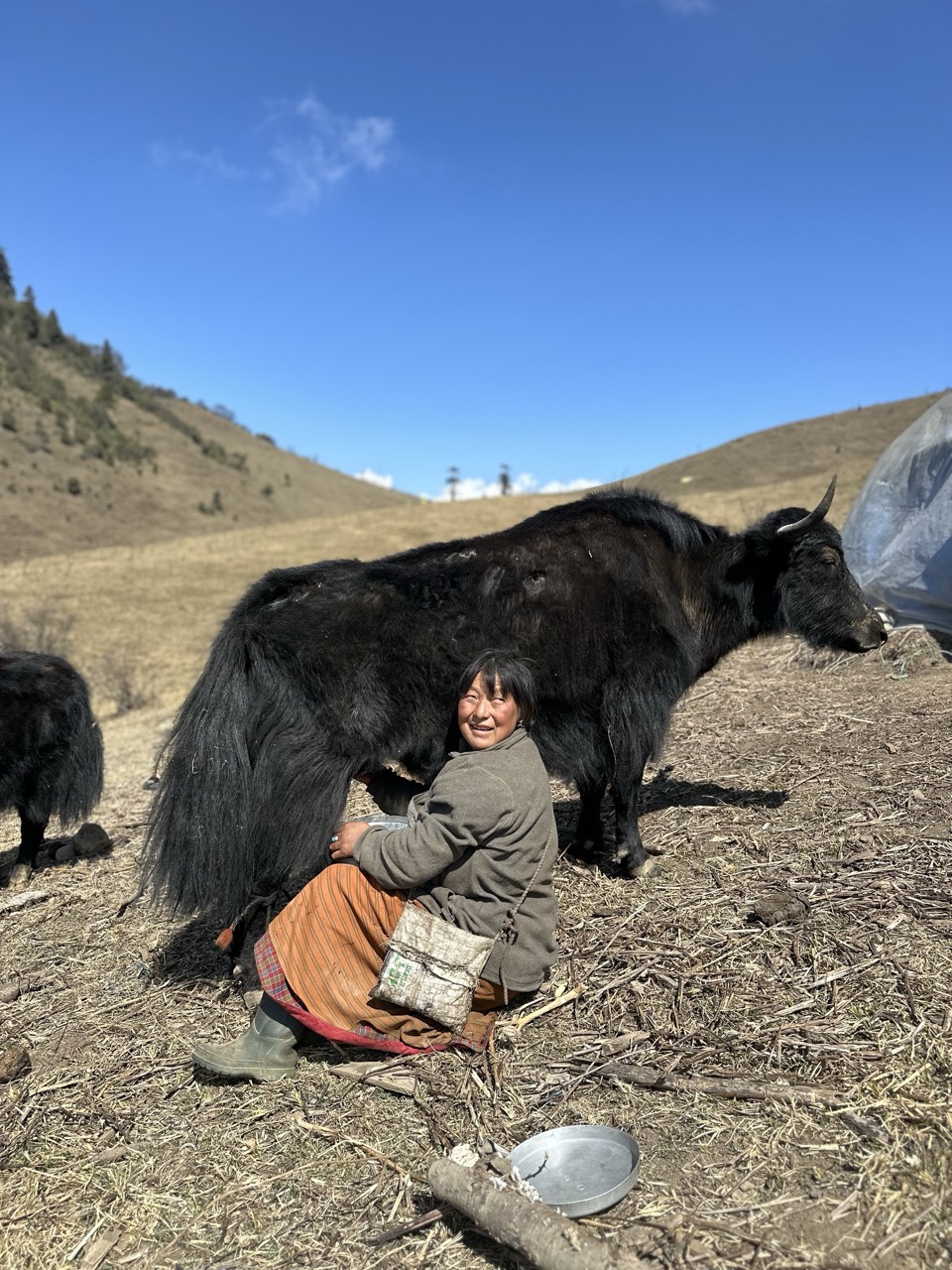
The northern Bhutanese are still nomads, and the herd belongs to them. The northerners were extremely friendly, and gladly showed us yaks, and calves, and offered a piece of yak cheese and yak milk.
There is a separate story with yak cheese - long necklaces of this cheese are hanging all around. I kept trying out a piece, and this was a perfect moment. We bought the whole string and realized that the cheese was as hard as stone. Our guide shared that the yak cheese is used like a local chewing gum during cold times, and it helps you to get warmer. It is also used in cooking for the Bhutanese traditional dish - chili cheese, which we tried multiple times during the trip.
A short hike from Pelela to Kumbu
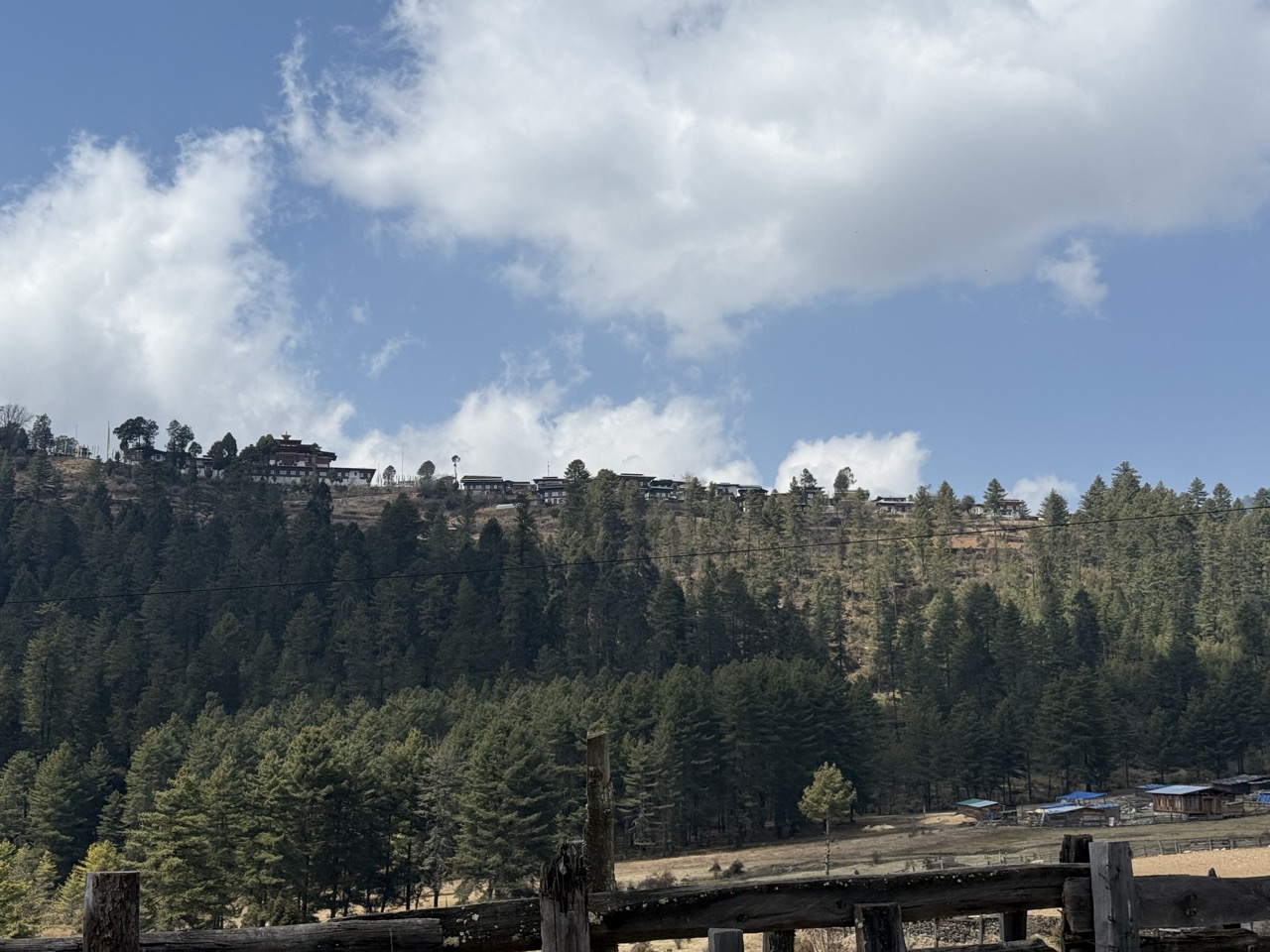
After interacting with Yal’s herders, we went for a short walk (it wasn’t really a hike) around the valley. Firstly, we walked through a nearby village, where it’s possible how people in this area live. To be honest, it doesn’t look like they are poor - we were passing by the wealthy households, with well-developed fields and equipment. Obviously, it’s different from the city-life lifestyle and more leaning toward a rural way of living.
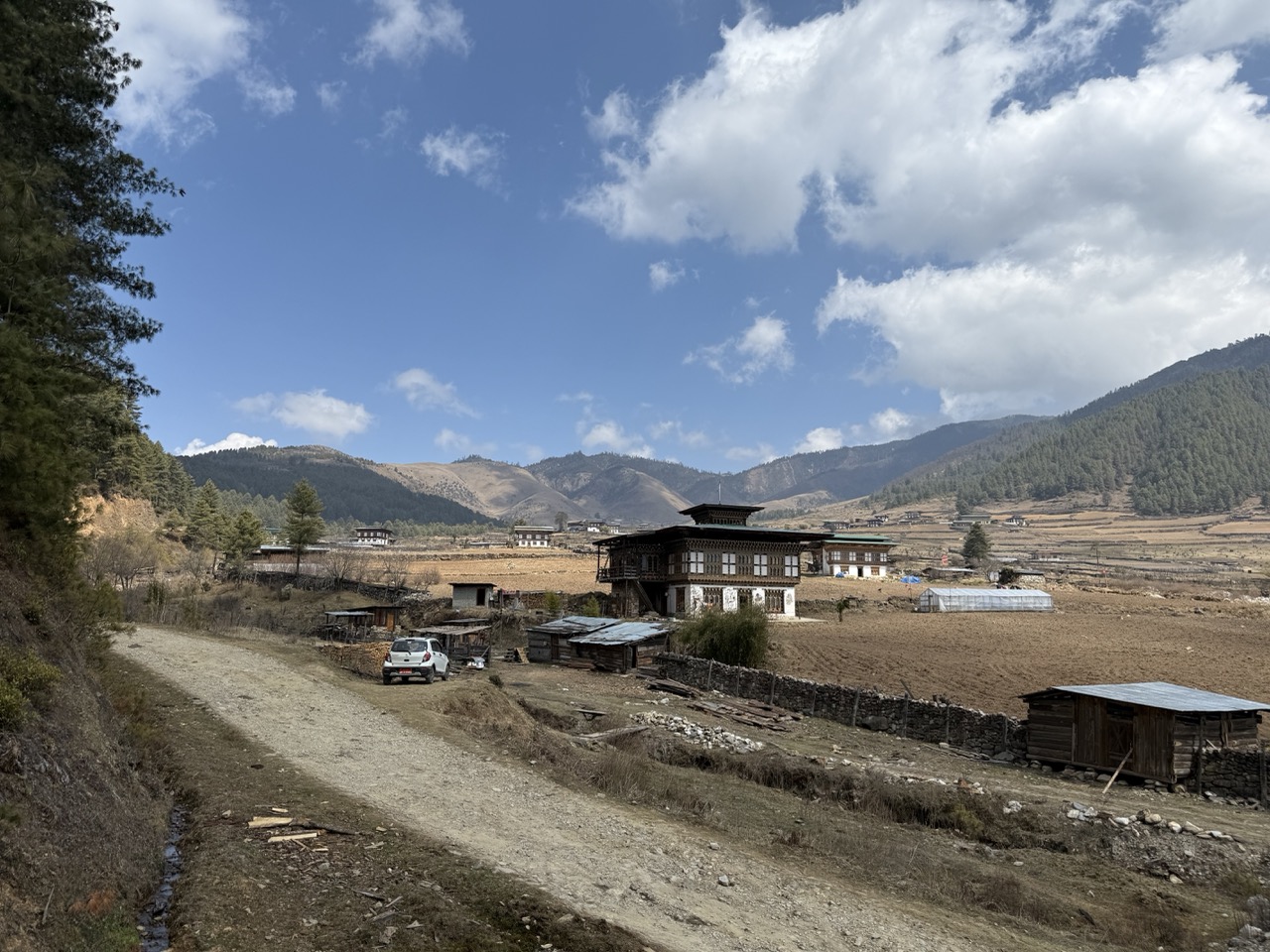
The main road slowly transferred to a tiny pathway that led us to a groove that stretched around the valley.
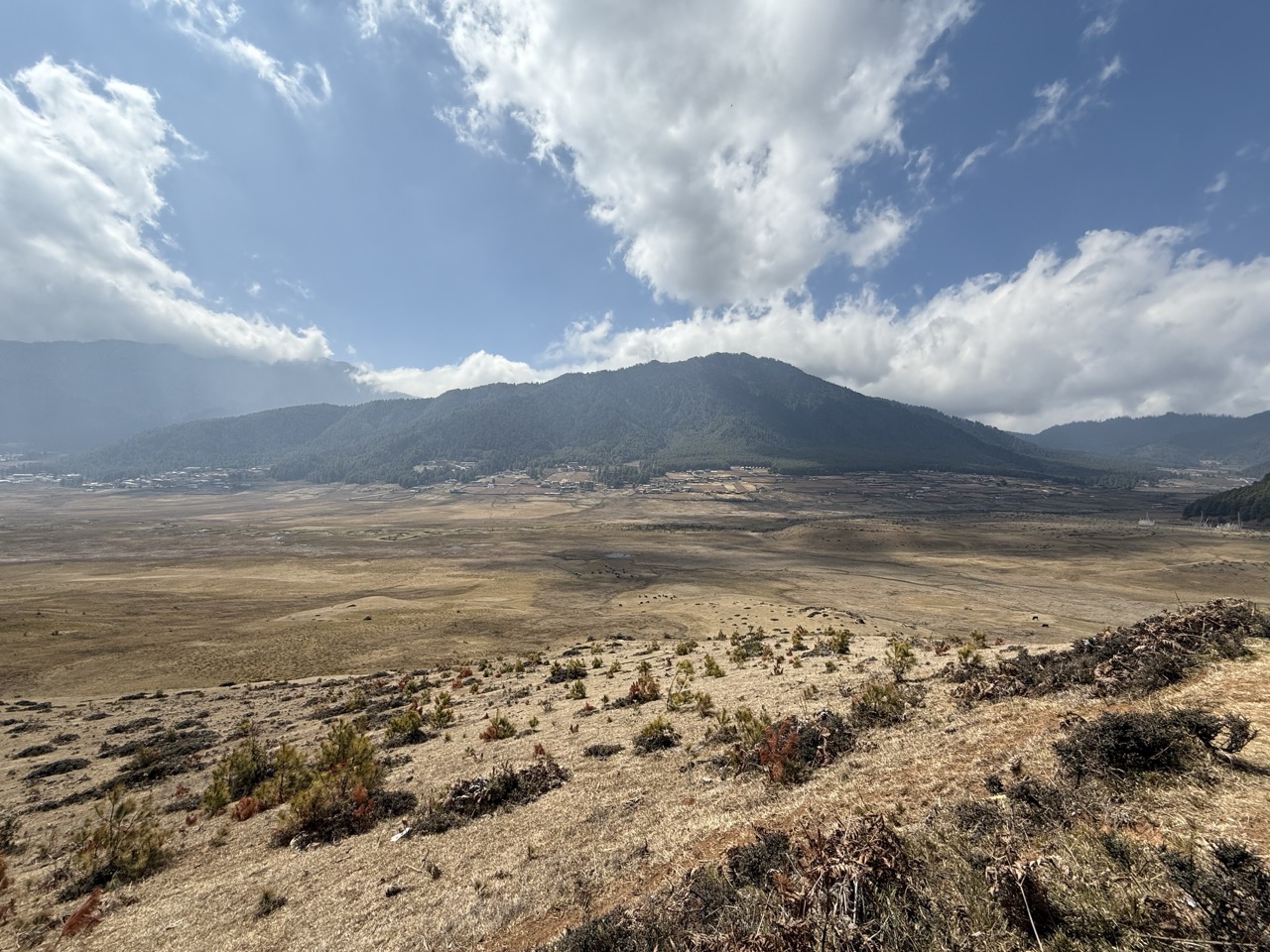
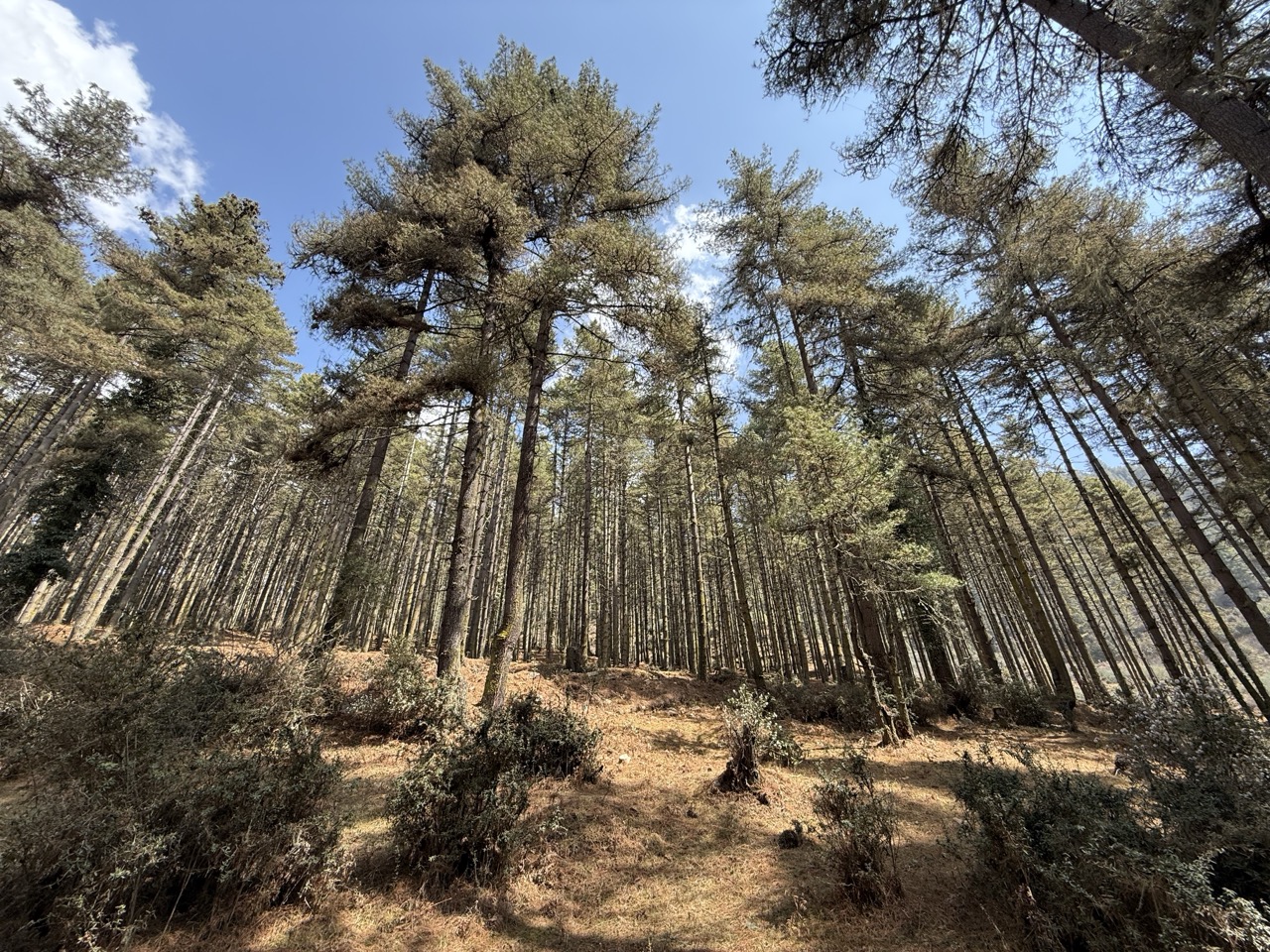
This walk was almost like in Russian forests in early fall or late spring - a slightly cold air, an aroma of pine trees, and a churn of pine needles under shoes.
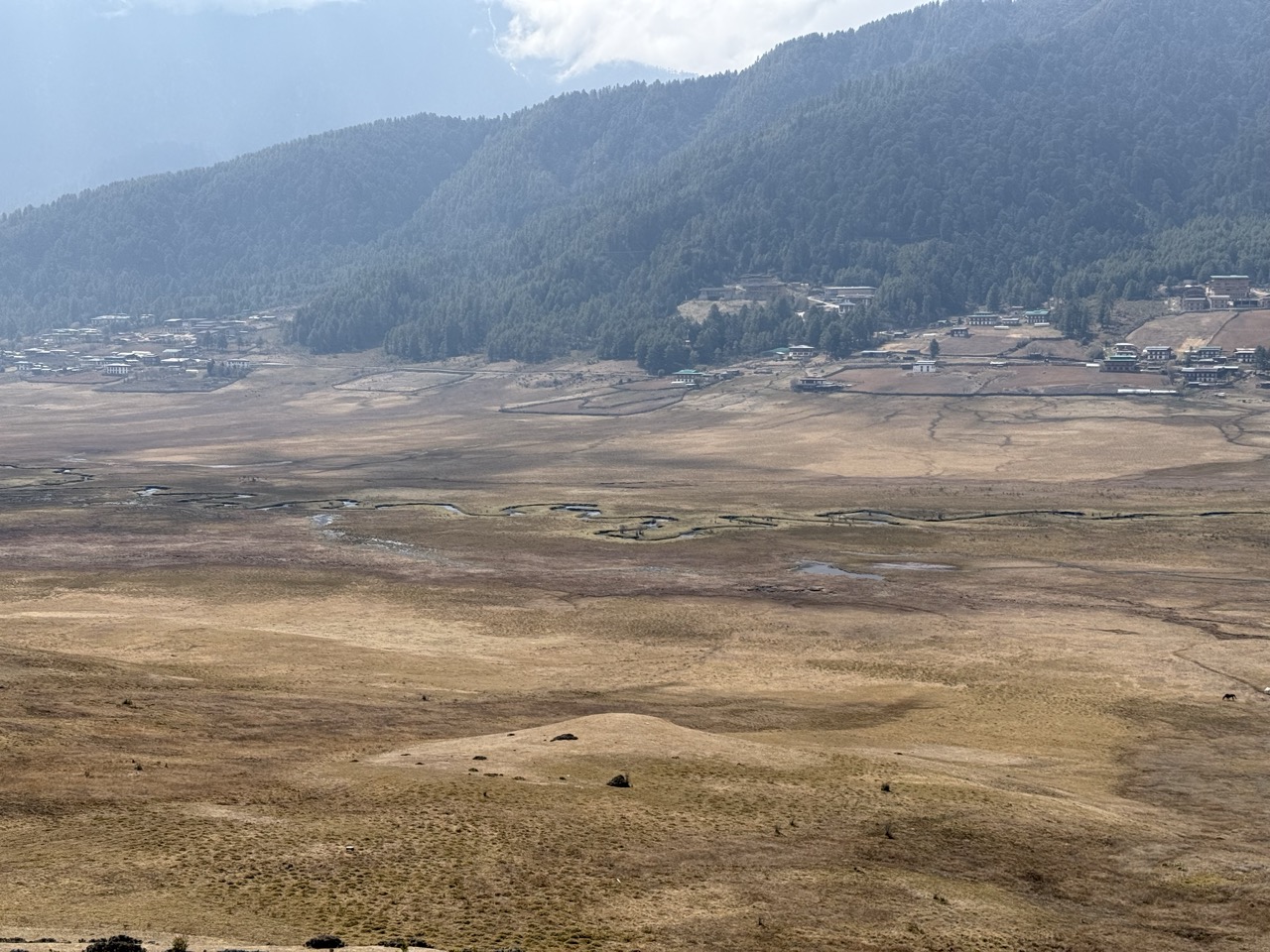
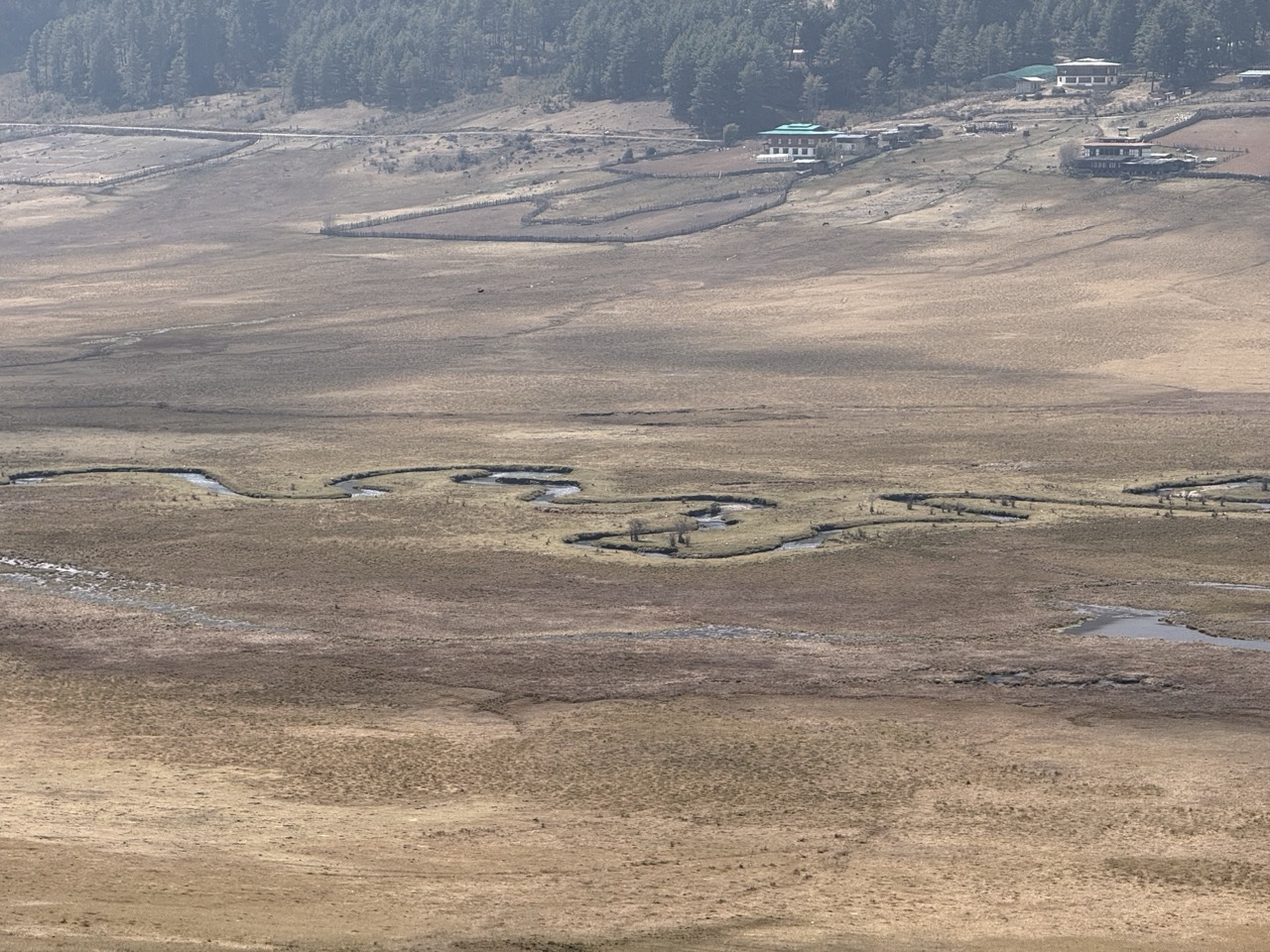
The walk almost ended at a stunning observation deck that gave us a view of the whole valley. Likely I brought my binoculars, so it was possible to view intricate details across the valley.
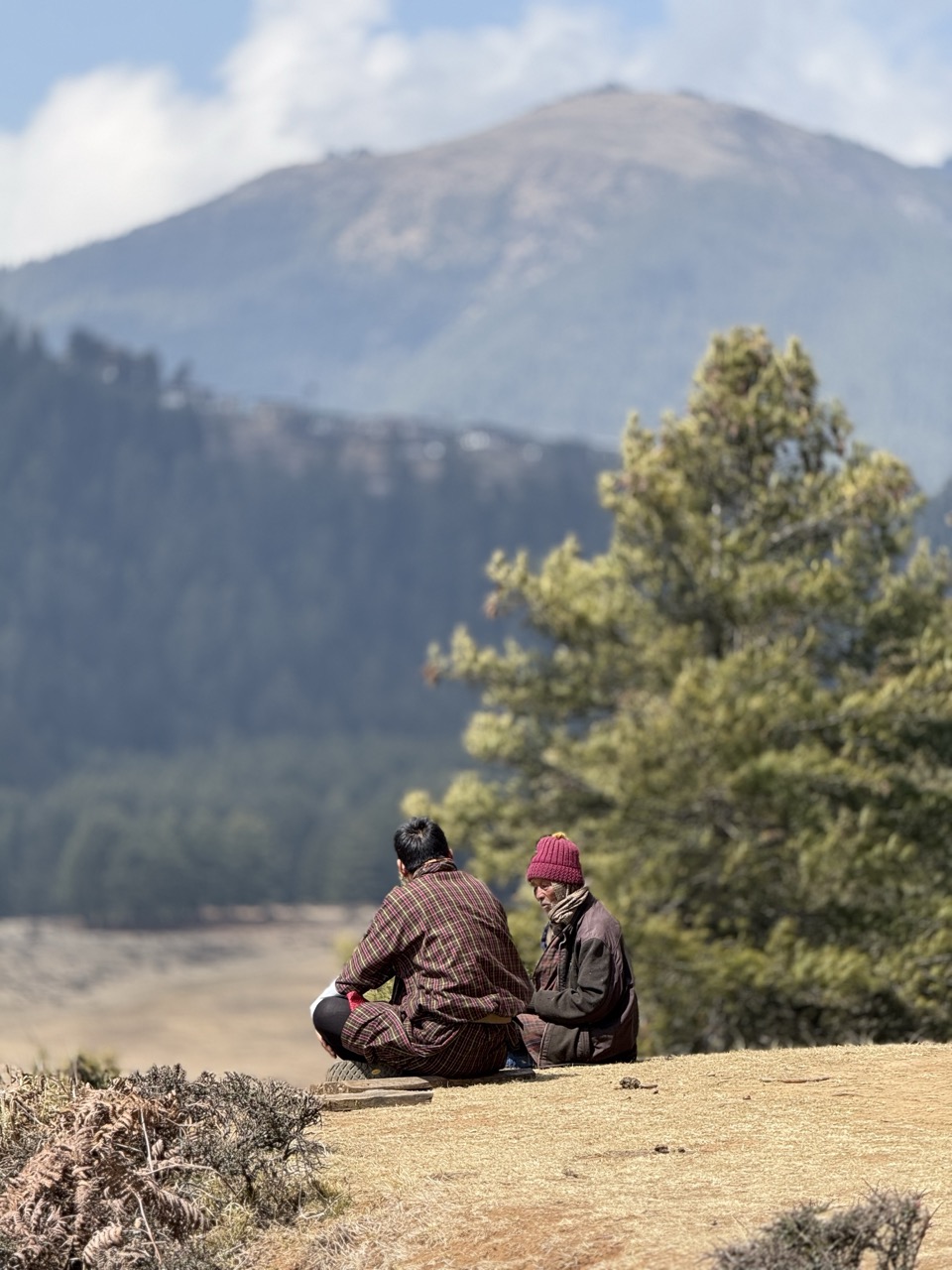
Black-necked cranes sanctuary
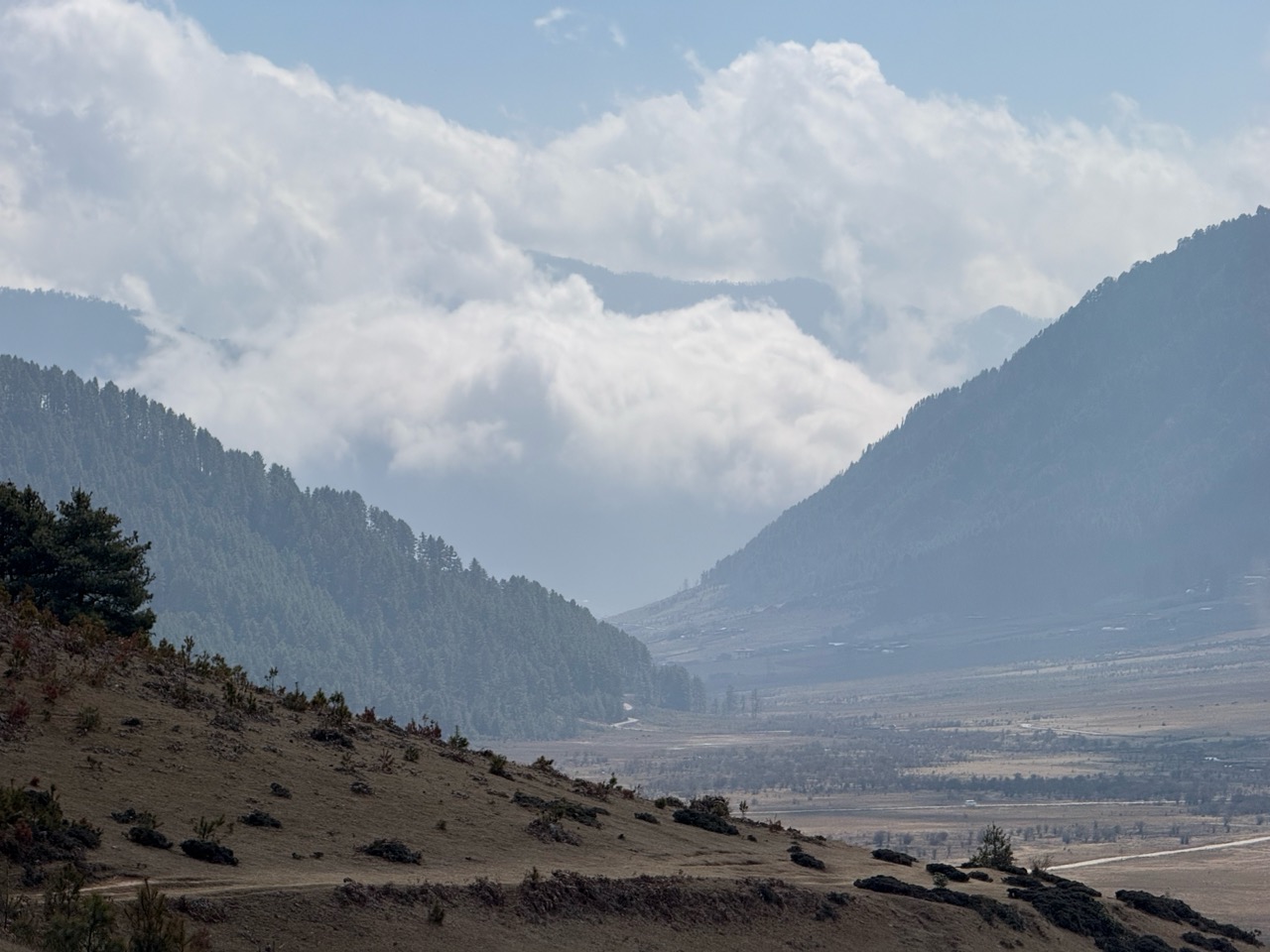
After the walk, we had a quick lunch and headed down to the black-necked crane sanctuary. Actually, the whole valley is a crane sanctuary, but there is a small building to educate tourists on Bhutan’s efforts to preserve its nature.
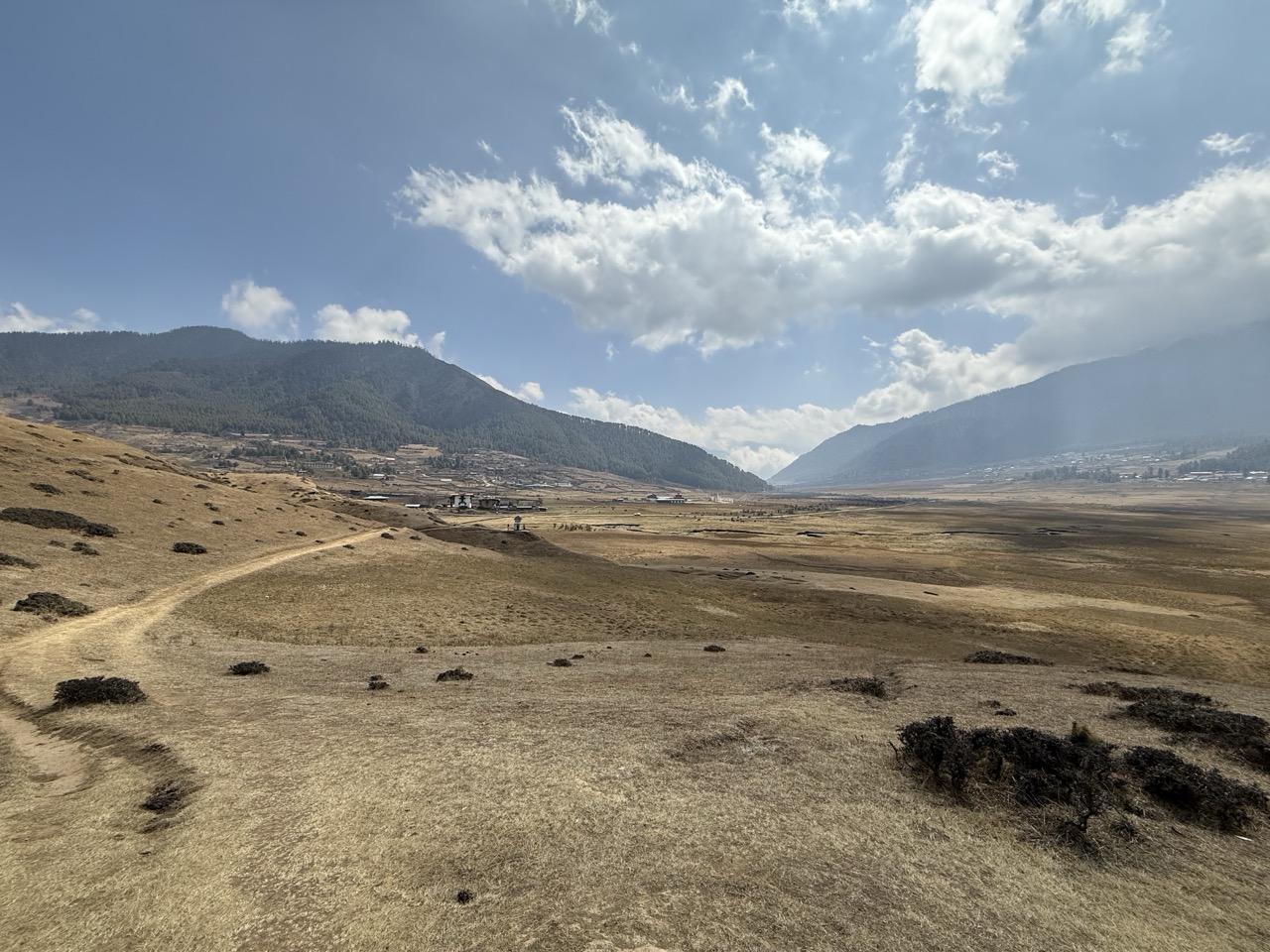
At the building, there is a small cafe, an exhibition dedicated to the birds of Bhutan, a cinema room with a short movie about black-necked cranes, and, lastly, a space with mounted binoculars to contemplate cranes from afar. Unfortunately, we haven’t had a chance to see these beautiful birds in the wilderness, but the sanctuary has a couple of cranes for the public to admire.
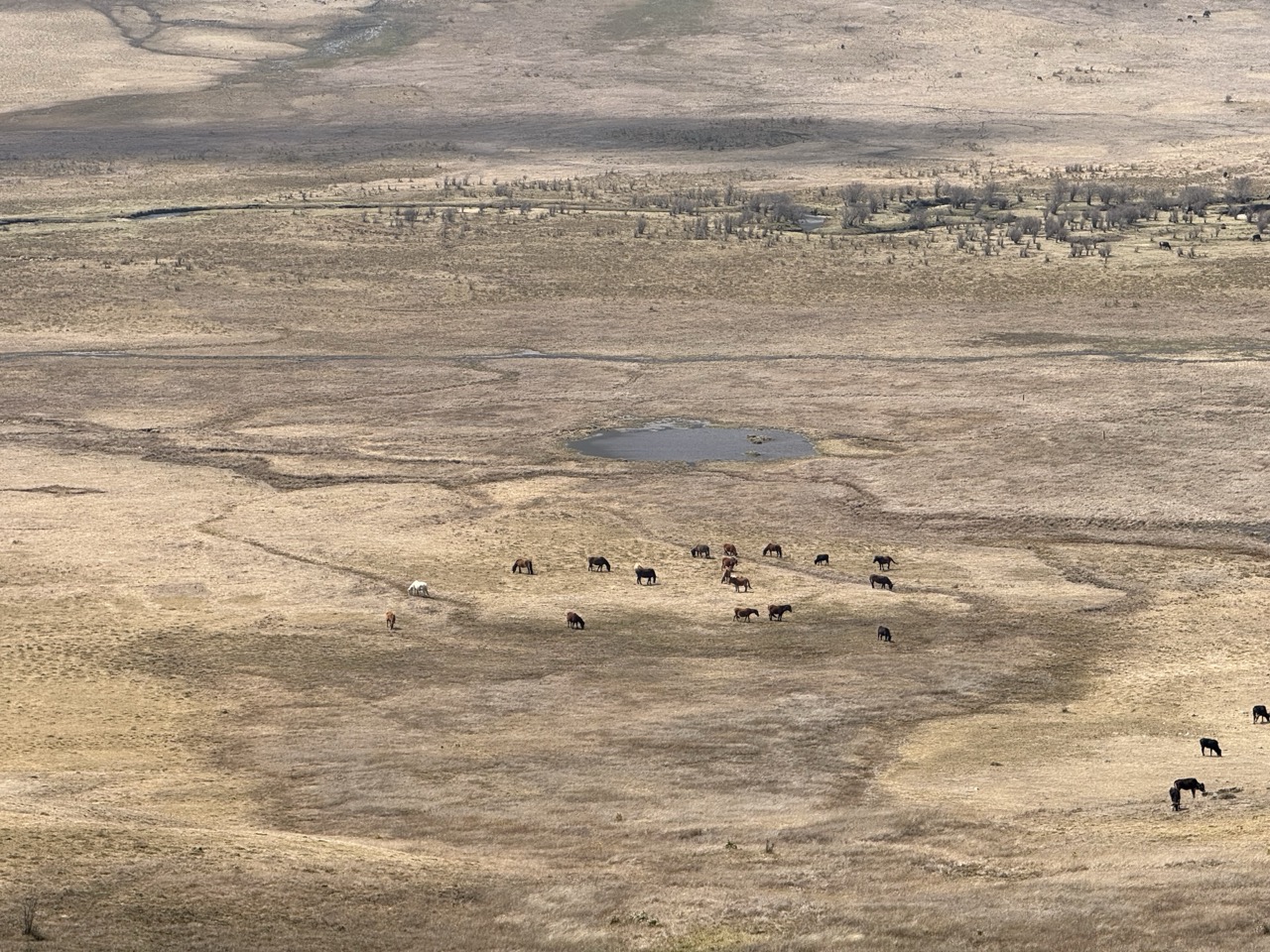
Gangtey Monastery
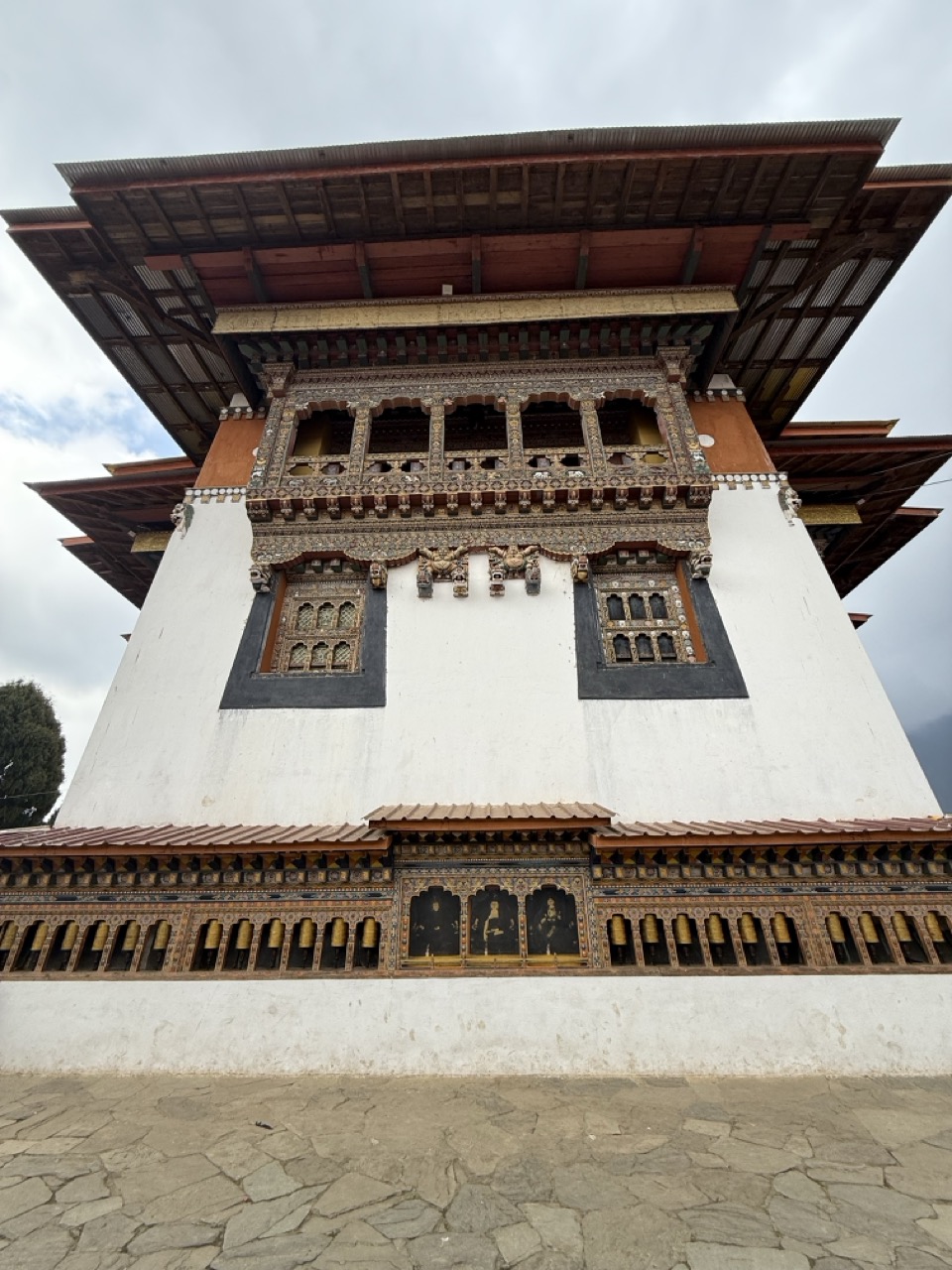
After the sanctuary, we had a brief stop at the local monastery. The most interesting thing is that the monastery doesn’t belong to the central monk body, and sustains only on donations. The monastery itself also looks different compared to other Bhutanese monasteries. Firstly, it is structured differently - it’s a square-shaped, sturdy building surrounded by thick walls. The place looks more like a fortress than a monastery. The northern, nomadic people are using this monastery as a temporary storage, where they keep their stuff during the transition between various stops.
Gaselo Eco Lodge
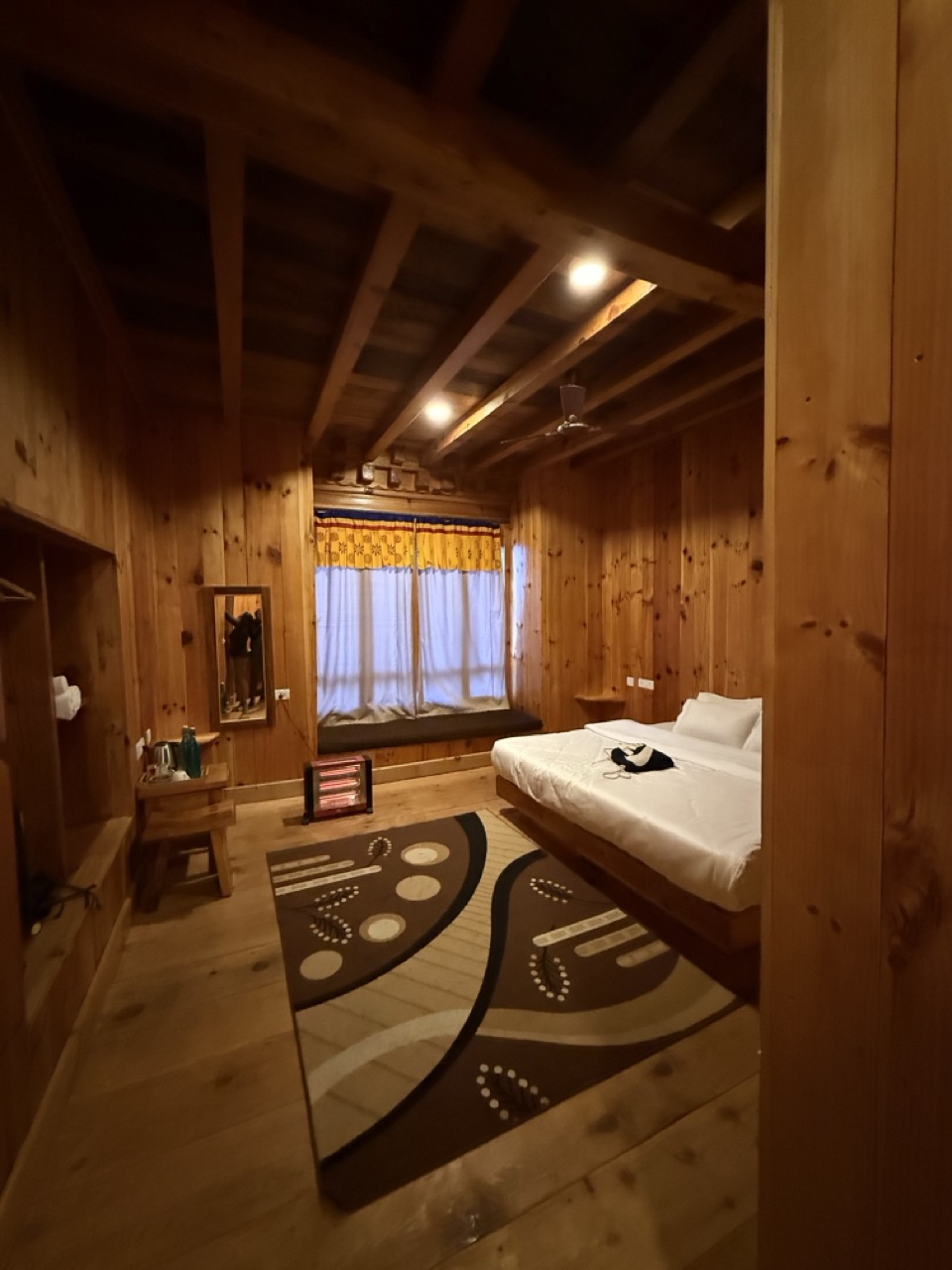
Lastly, our last stop was at the Gaselo Eco Lodge, where we settled for the night. The stay was amazing, and you have your very own Bhutanese traditional home. The houses are wonderful, but we had one minor issue - the place was rather cold at night. But, surprisingly, we didn’t freeze during the night and the overall stay was great.